Wednesday, November 10, 2010

Idea 11: Shrinking


Shrinking

–verb (used without object)
1. to draw back, as in retreat or avoidance: to shrink from danger; to shrink from contact.
2. to contract or lessen in size, as from exposure to conditions of temperature or moisture: This cloth will not shrink if washed in lukewarm water.
3. to become reduced in extent or compass.


The Incredible Shrinking Women

Recently I watched “The Incredible Shrinking Women,” starring Lily Tomlin and Charles Grodin.  The movie is about a woman “Pat Kramer” who begins to shrink after being exposed to a mixture of household chemicals.  Kramer begins to shrink more and more each day wanting people to treat her as a equal even though she was small she managed to make America love her for the mysterious thing happened to her.  It was interesting to watch a movie about household chemicals causing a suburban housewife to shrink.  I found this movie to very fascinating.  This movie is so interesting to me because I can see someone making a movie about this now (current time) especially since everyone is going green. Also I really enjoyed seeing the perspective of the scale between Pat Kramer and her suburban house.  After Pat Kramer shrank small enough her family let her live in a dollhouse where everything was the right scale for Pat. 

My work is similar to this movie in that I am making myself small however everything around me (in the house) is of a larger scale.   Overall, I found the Incredible Shrinking Women to be a very intriguing movie.


Dictionary.com : http://dictionary.reference.com/browse/shrinking

Tuesday, November 9, 2010

Graduate School Application: SFAI

I choose San Francisco Art Institute as my school to “apply” for grad school, mostly because it is a highly ranked School for photography in the country.  I also choose San Francisco Art Institute Because I love San Francisco in general, I love how the school is right in the city and is surrounded by so much culture.  After traveling most of the west coast I wasn’t so fond of California until I visited San Francisco, which reminds me of the east coast a lot. 


One professor at San Francisco Art Institute that’s work attracted me was Alice Shaw.  Alice Shaw is a conceptual artist and is a visiting Faculty member in the Photography department.  Shaw attended San Francisco Art Institute and received her Bachelors of Fine Art as well as her Masters in Fine Art there.  In Shaw’s work she combines personal documentation with humor.   She has a book out called, “People Who Look Like Me” published in 2006.  Shaw’s book is a collection of photographs of herself with family members or friends who she feels has common traits with her.  I am interested in Shaw’s work because she takes pictures of herself and her family, which I recently have been doing.  

Alice Shaw’s Blog:

http://aliceshawphoto.blogspot.com/search?updated-min=2010-01-01T00%3A00%3A00-08%3A00&updated-max=2011-01-01T00%3A00%3A00-08%3A00&max-results=22 


Phil and Me, 2002, from the book People Who Look Like Me, published by Gallery 16, San Francisco

Amos and Alice 2002, From the book People Who Look Like Me, published by Gallery 16, San Francisco

Makeover 1999, From the book People Who Look Like Me, published by Gallery 16, San Francisco


Nancy Tobin


Nancy Tobin is currently a student at San Francisco Art Institute.  Tobin is a Sculpture student and creates these white airy sculpture that remind me of Annette Messager’s sculpture work.  Tobin's work has been on display at the San Francisco Art Institute's gallery space the Diego Rivera Gallery.  Below is a installation piece in the gallery by Nancy Tobin.


Nancy Tobin

Link to student Gallery Work: http://activeweb.sfai.edu/galleries/students.aspx 


Sunday, November 7, 2010

Artist Post 10: Loretta Lux

Loretta Lux


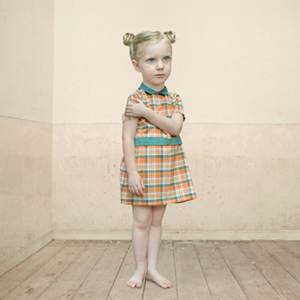
Loretta Lux was born 1969 in Dresden, East Germany.  Lux studied painting and graduated from the Academy of Visual Arts in Munich.  Lorette Lux is a fine art photographer and is known for her surreal portraits of young children.   In 2004, Lux displayed her work at the Yossi Milo gallery in New York.  The entire gallery sold out making Loretta Lux well known.  Later in 2005, Lux received the Infinity Award for Art, from the International center of Photography.  Lux has displayed her work numerous times in both solo and group exhibitions. 

Loretta Lux takes photographs of children, picking out the outfits she wants them to wear, "I never allow them to wear their own clothes," Lux stated, and then she chooses one photo out of two or three sessions of taking photos with the same child.  After choosing a photograph of the child, Lux then takes the child out of the computer file and then places it or a different background that Lux painted or photographed.  Lastly Lux removes details and alters the colors making the overall picture appear like pastel. 

It is thought that Lux is longing for an idealized childhood creating perfect children in her work as a result.  Lux’s childhood appears to play a large role in her artwork in reference to Lux’s childhood growing up in eastern Germany Lux stated, “I deeply resent the fact of having grown up there."  "My work isn't about these children," she explains. "You can recognise them, but they are alienated from their real appearance - I use them as a metaphor for innocence and a lost paradise."

Lux prefers her work to be at an intimate scale 12inches by 12inches (small) to 20inches by 20 inches (Large). 

Loretta Lux’s work attracts me because of her calm pastel like photographs.  They are calm yet they make me think about how they were created.

Lux’s most recent exhibitions: Solo, “Loretta Lux” Kulturhuset, Stockholm, 2009 and
Group, “Collection” The National Museum of Art, Osaka, 2009


Loretta Lux, "Lois" 3, 2000, 12"x 12" or 20" x 20" (?)


Loretta Lux, "Hidden Rooms" 2, 2001, 12"x 12" or 20" x 20" (?)


Loretta Lux, "Girl with Marbles", 2005, 12"x 12" or 20" x 20" (?)


Loretta Lux, "The Green Room", 2005, 12"x 12" or 20" x 20" (?)


Loretta Lux, "The Rose Garden", 2001, 12"x 12" or 20" x 20" (?)


Works Cited

Loretta Lux. 6 November 2010. <http://www.lorettalux.de/>. 

Baring, Louise. "I use children as a metaphor for a lost paradise." 12 March 2005. 6 November 2010. Telegraph. <http://www.telegraph.co.uk/culture/3638552/I-use-children-as-a-metaphor-for-a-lost-paradise.html>. 

Loretta Lux. Wikipedia. 31 October 2010.  7 November 2010. <http://en.wikipedia.org/wiki/Loretta_Lux>. 

Wednesday, November 3, 2010

Idea 10: Paper Dolls

Paper Dolls

–noun
1.
a paper or cardboard, usually two-dimensional, representation of the human figure, used as a child's toy.
2.
Usually, paper dolls. a connected series of doll-like figures cut from folded paper.


Paper Dolls are figures cut out of paper wearing a basic outfit, with clothing options to change into.  Paper dolls began in Asian cultures where origami and artful paper folding was popular.  Centuries ago, Asian cultures were believed to use paper dolls for religious ceremonies.  However all around the world countries had their own different versions of paper dolls, such as in France paper dolls were called pantins and were created to entertain adults.  Today, paper dolls are widely available and are used by young children and adult collectors. 

Paper dolls were also the start to Barbie by mattel, while Ruth Handler watched her child Barbara play with paper dolls, she wondered why the dolls couldn’t be 3d. 


After my mid-way critique I listened back to the feedback I received.  One comment was made in reference that I’m turning myself into an object however that goes in relationship to my concept, that everyone plays a role as a character.  I am interested in pursing the idea of making my work wrk playful and more hands on with  my audience.  Therefore, I want to create outfits for myself (the figure in my work) like paper dolls, that the audience or viewer can change resulting in my work being more playful.  


Works Cited


Wikipedia: Paper dolls. 1 October 2010.  3 November 2010. 
http://en.wikipedia.org/wiki/Paper_doll 

Dictionary.com 3 November 2010.
http://dictionary.reference.com/browse/paper+dolls 

Tuesday, November 2, 2010

Artist Lecture- Zoe Beloff


Zoe Beloff

I noticed from your website that your family especially your parents seem very influential and perhaps instrumental to your work.  Because your parents were both psychologists does psychology have any particular influence on your work?

Many of your films resemble characteristics of old films, by using slide projectors, hand cranked projectors, etc. Have you ever considered making a project using modern technology and what does this old technology have in relation to your film topics?

Response

Guest lecturer Zoe Beloff is a filmmaker, and works with projection performances, installations and drawings. I found Beloff’s work to be very fascinating and rousing. During Beloff’s lecture I was wondering why she spent so much time talking about Albert Grass, and not her “own” work until she revealed that she created Albert Grass, and the Coney Island Amateur Psychoanalytic Society was not real.  When Beloff first announced this I thought she was joking however then I thought about the society and how Beloff explained her project on Freud’s visit to Coney Island.  Beloff said she was assigned Freud brief visit in 1909 but in describing the project she alluded to Glass’s project rather than her Coney Island work.  Upon revealing that Glass was her creation and not real, one could notice clues Beloff said during the lecture.

Beloff seemed to answer both of my questions during her lecture.  Beloff’s work noticeably deals with psychology and medical conditions of people that interest her.  For instance, in Beloff’s video, “Charming Augustine” she showed and described through video and sound how young women with hysterics acted during the 1870’s.   Beloff later in the lecture discussed her Coney Island project and how she is interested in the real versus unreal. When asked during the lecture about the book of Albert Grass’s drawings Beloff stated, that her mother noticed that the drawings resembled Beloff’s.  I found this interesting that Beloff’s mother could tell they were her drawings however Beloff didn’t tell her mother that she was Albert Grass.  I found this to be fascinating because Beloff’s parents seem to be a major reason for why Beloff is so interested in psychology. 

Beloff answered my second question regarding modern technology.  People frequently comment that Beloff should redo her projects for television. Beloff is open to that now that 3-d television is available however she has not received enough funding.  

Monday, November 1, 2010

Midterm Critique Video Response

Midterm Critique Video Response

I feel that my critique was successful I received some vital observations that have helped me expand my perception of my entire project.  For the obvious things that I know I need to improve before the final is that I need to improve my lighting to make it more consistent and easier for myself when I edit my photographs.  Also the printing quality, I want my images to appear vintage and have an old cast to them, however it was brought up during my critique that some of the images were very green, I need to work on perfecting the colors so that it is exactly what I want. 

It seemed as if it was agreed upon that most people enjoyed how subtle the scale was between the dollhouse and the figure of myself.  I want the cut out (of the models) to be a believable size but I also want the viewer to know that the figures don’t actually belong in the dollhouse.  It was commented that the viewers liked how one has to sit back, spend time with the photograph to notice that the scale is off.  

I brought up the question during my critique of whether or not people enjoyed the photograph of my mother and me.  Most people agreed that it might be successful for me to bring in more characters to each photograph to make the images seem more playful. 

During my critique, I was told to be aware that I’m turning myself into an object, which I am aware of however that goes in relationship to my concept, that everyone plays a role as a character.  After hearing all the comments during my critique I am interesting in pursuing the idea of making my work more playful, by making my project more hands on with my audience.  I want to do this by perhaps turning me into a paper doll, or have outfits so that people can change my looks in each photograph.  


Overall, I feel good about my critique and am excited to start working to improve my project.

Zoe Beloff Questions


Zoe Beloff

I noticed from your website that your family especially your parents seem very influential and perhaps instrumental to your work.  Because your parents were both psychologists does psychology have any particular influence on your work?

Many of your films resemble characteristics of old films, by using slide projectors, hand cranked projectors, etc. Have you ever considered making a project using modern technology and what does this old technology have in relation to your film topics?