1.an informal photograph, especially one taken quickly by a hand-held camera.
2.Hunting . a quick shot taken without deliberate aim.
3.Informal . a brief appraisal, summary, or profile.
–verb (used with object), verb (used without object)
4.to photograph informally and quickly.
Snapshot
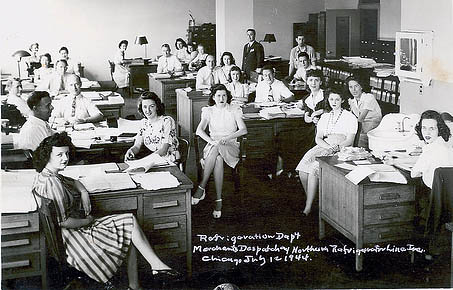
A snapshot is a photograph that is taken quickly and impulsively.Most snapshots are taken without the intention of being well framed or posed photographs.Snapshots became possible with the increase of film speeds and the option of hand held cameras.When Kodak introduced the No. 1 Kodak camera with 100 exposures in a light hand held camera, photography changed so that everyday people could take “snapshots” of events or pictures from their everyday lives.
I have recently been researching snapshot images and the quality of them, trying to figure out how I can make my images have a similar characteristic. Because I am interested in a more vintage timeframe I plan to use a point and shoot camera from the late 1950’s to photograph my subjects.I am currently investigating women asking them to select a setting that helps accentuate their comfort zone.It is important to photograph these women with a snapshot camera.By utilizing a snapshot camera I hope to capture and highlight the casualness between the women and the meaningful space they occupy.
Quotes:
“The term snapshot was coined in 1860 by Sir John Herschel, who saw the aiming and quick snapping of the camera shutter as analogous to the quick aim and snap of a gun trigger used in hunting.”
“Snapshots democratized photography by making it simpler and more accessible to the masses as the years progressed. Taking pictures of friends, relatives, travel, and important events and rituals such as births, baptisms, bar mitzvahs, confirmations, graduations, and marriages provided a visual diary for families.”
This article was about snapshot photography and how it started with the introduction of Kodak’s No. 1 camera.This article also points out how snapshot photography has changed and influenced not just photography but also painters, television, journalism etc.Snap shot photography has grown over the years and as technology is improving snapshot photography has been growing and advancing as well.
Nikki Lee was born in Korea in 1970 and now lives in New York City. Lee earned her Bachelors of Fine Arts at Chung-Ang University, in South Korea in 1993 and continued her studies at the Fashion Institute of Technology in New York City. Lee then matriculated at New York University completing a Masters of Arts in photography. Lee’s photographic series have often dealt with looking at people’s identity and social behavior.
In 1997 while still attending NYU, Lee began “Projects”, a series of photographs, which consisted of a snap shot quality. Projects contained Lee who posed with different social groups consisting of punks, Hispanics, skateboarders, Hip-hop musicians and more. Lee would befriend a specific social group, become comfortable with them, and then take portraits of herself embraced in their social group. “Her use of the snapshot aesthetic is partly what convinces us that she belongs—along with her uncanny ability to strike the right pose.” Another interesting piece Lee produced was “Parts” in 2005, which included a male (significant other) and Lee posing. Each photograph was cropped so that the viewer cannot identify Lee’s companion in the picture.
Lee’s work attracts me because of the snapshot quality of her images. I found it interesting that Nikki Lee does not actually take all of her photographs. To achieve the snap shot quality in her “Projects” series Lee asked her friends to take the photograph while she was in character with different social groups. Lee in order to attain the desire she wanted did not use a professional camera to capture these images. Instead she used a simple point and shoot camera. For my project I have recently been researching snapshot images and the quality of them, trying to figure out how I can make my images have a similar characteristic. I also am interested in Nikki Lee’s fascination with people and their social behavior. I am currently investigating women, in their comfort zone, and the area that they find themselves in or attached to all day.
Gallery: I could not find Nikki Lee’s most recent gallery showing however she has shown work at the Museum of Contemporary Photography in Chicago, IL.
“I make a kind of art that seems very simple at first, but once you peel off the layers you find many stories inside it.”—Nikki Lee
“She introduces herself as an artist (though not everyone believes her or takes it seriously), and then spends several weeks participating in the group’s routine activities and social events while a friend or member of the group photographs her with an ordinary automatic “snapshot” camera.” – NY Times
Kino, Carol. 1 October, 2006. 7 February 2011. http://www.nytimes.com/2006/10/01/arts/design/01kino.html
Nikki Lee. Museum of Contemporary Photography. http://www.mocp.org/collections/permanent/lee_nikki_s.php
Parts, The Men are missing, Nikki Lee, Color print
Projects: Lee as a fly girl, Nikki Lee, Color Print
1.the unlimited or incalculably great three-dimensional realm or expanse in which all material objects are located and all events occur.
2.the portion or extent of this in a given instance; extent or room in three dimensions: the space occupied by a body.
3.extent or area in two dimensions; a particular extent of surface: to fill out blank spaces in a document.
4.Fine Arts .
a.the designed and structured surface of a picture: In Mondrian's later work he organized space in highly complex rhythms.
b.the illusion of depth on a two-dimensional surface.
In my most recent meeting with Paul, we discussed how people act differently in distinctive spaces and how women have done this for decades. Women have a tendency to change personalities depending on various situations. Women interact very differently communicating through a text to a significant other as opposed to an email to a friend. I have become interested in the space that women spend the most time in and how they relate to that space.
“The most typical separation is that the division of public and private, where the private home is a women’s sphere and the public marketplace a men’s sphere. It relates to many different historical and biological reasons, but exaggerated by socially constructed as a symbolic differences.”
.
"Our behavior is purposeful; we live in a psychological reality or life space
that includes not only those parts of our physical and social environment to us but also imagined states that do not currently exist." quotation by psychologist Kurt Lewin
This article is about personality development and how people’s characteristics make them different and unique from other people. In this article they discuss how hereditary, environmental influences, and certain unique situations or events contribute to personality development as well.
This article is about the boundaries of segregated spaces between men and women. Also this article discusses the differences between men and women occupying space.
Larry Sultan was born in 1946, in New York. Sultan received a Bachelors degree from the University of California in 1968, and a Masters of Fine Arts from the San Francisco Art Institute in 1973. Earning several Photography Fellowships from the National Endowment for the Arts, Sultan also received a Guggenheim Fellowship in 1983. Sultan had his work shown at numerous exhibitions including the Chicago Museum of Contemporary Art, Corcoran Museum of Art in Washington, D.C., San Francisco Muesum of Modern Art, and many more. Author of numerous published books The Valley, 2004, and Pictures from Home, 1995 contain some of Sultan’s best known work.
In Pictures from Home Sultan explored his family history and their documentation of his family. Sultan determined what the word “family” really means by exploring his past. “Pictures from Home was a ten-year project exploring the myths of family life. I used my parent's family snapshots and stills from their home movies along with photographs that I made of them to create an interweaving set of images and text that explores how photography helps to construct family history and identity.” Sultan also is known for his work The Valley series, which focused on the area in which he grew up, San Fernando Valley. Sultan photographed ordinary homes as sets for pornographic films. In this work Sultan used suburban life as a backdrop. Sultan stated in an interview, “I find a lot of depictions of suburban life to be quite shallow. Either they're hypercritical, like new topographics where tract homes are seen as generic structures for generic lives, or they're the kind of one-dimensional dramas or sitcoms that are prevalent in popular culture. …To me, the suburban home is a kind of projection screen for fantasies, it's rich for storytelling.”
I am drawn to Sultan’s work and how he incorporated classic suburbia as the setting and backdrop for his series. Furthermore, I am also interested in the way Larry Sultan portrayed his characters and family in his projects. I am focusing on dollhouses as a stage for my photos. I primarily used myself in my dollhouse series and took a variety of classic occasions that occur in family life and the roles females play in households. The dollhouse symbolizes the traditional house. I want my audience to feel a connection would like to expand my repertoire and use a variety of women and see how this changes my project.
Larry Sultan, Practicing Golf Swing, 1989, chromogenic print,
17 1/2 in. x 21 7/16 in
Larry Sultan, My Father Reading the Newspaper from the series Pictures from Home
1985, Chromogenic print, 17 1/16 x 21 3/16 inches
Larry Sultan, “Topanga Skyline Drive #1,” from the series The Valley;
1999; Chromogenic print; 40 in. x 50 in.
Larry Sultan, Cabana, 2000, Chromogenic print;
Larry Sultan Child's Bedroom, Calabassas,
2001, Chromogenic print;
Website: Larry Sultan doesn’t have a website.
Gallery: Larry Sultan’s most recent solo exhibition was 2005, at the Musee de l’Elysee, Lausanne, Switzerland.
1.of or pertaining to thehome, the household, household affairs, or the family: domestic pleasures.
2.devoted to home life or household affairs.
3.tame; domesticated.
4.of or pertaining to one's own or a particular country as apart from other countries: domestic trade.
5.indigenous to or produced or made within one's own country; not foreign; native: domestic goods.
–noun
6.a hired household servant.
7.something produced or manufactured in one's own country.
8.domestics, household items made of cloth, as sheets, towels, and tablecloths.
Quotes
“Beginning in the 19th century, the required educational preparation, particularly for the practice of medicine, increased. This tended to prevent many young women, who married early and bore many children, from entering professional careers.” (wic)
“ Traditionally a middle-class girl in Western culture tended to learn from her mother's example that cooking, cleaning, and caring for children was the behavior expected of her when she grew up.” (wic)
This article is about women and the roles they have played in politics, the workplace, and women fighting for equality. This article contains numerous facts about the history of feminist roles and how they have progressed over the decades.
This article is about a women’s place or position in the household and the work that they were expected to do.
In my last meeting with Paul, it was suggested that I look into domestic current living situations compared to those of prior generations. Women were for generations not allowed to pursue certain careers or advance. This held true in the medical field, “Beginning in the 19th century, the required educational preparation, particularly for the practice of medicine, increased. This tended to prevent many young women, who married early and bore many children, from entering professional careers.” (wic)
During World War II many woman entered the work force only to return to domestic life after the war ended. As late as the nineteen fifties females upon graduating from high school still had limited career choices. Furthermore, women generally were expected to abandon their careers and assume responsible for overseeing the household and children if they married. “ Traditionally a middle-class girl in Western culture tended to learn from her mother's example that cooking, cleaning, and caring for children was the behavior expected of her when she grew up.” (wic) This held true in the 1960s. This idea is important with my work because I am interested in domestic space as a setting. Though females have more educational opportunities and job choices many females still seek a balance of combining a traditional household and career.
I plan on examining the “common” photographs that I took last semester and look at how they relate to a feminist perspective in a domestic space. My project originated with the idea of repeating events and characters in the household and the roles that they “play” essentially I am focusing more on women’s roles of the household and how they have remained fairly constant over generations.
Martha Rosler was born on July 29th, 1943 in Brooklyn, New York. A graduate from Brooklyn College in 1965 Rosler received her Masters of Fine Arts from the University of California, San Diego in 1974. Working with various mediums from writing, video, photo-collage, photo-text, and instillation and performance work Rosler’s pieces have been on exhibition in numerous galleries and museums since 1963. Rosler’s works appeared in museums both abroad and in the United States such as the Center for Contemporary Art- CCA, the New York Museum of Modern Art, London’s Institute of Art and Worchester Museum of Art. Currently Martha Rosler is working and living in Brooklyn, New York.
Rosler’s has focused on topics that she feels passionate about such as issues of politics, class, and gender. In Martha Rosler’s series, “Bringing the War Home: House Beautiful,” Rosler created photo-collages from life style magazines and images collected from the Vietnam War to make a commentary on the war and how it affects people in their suburban homes. Recently, in 2004 she revisited this project however focused on the Iraq war and how the images come into U.S. homes every evening. It is apparent Rosler’s work often relates to women and the roles that they often play. Domesticity plays a reoccurring role in Rosler’s work. In 1975, Rosler produced a mock cooking show “Semiotics of the Kitchen,” where Rosler stares directly into the camera, reciting kitchen instruments A through Z, and abruptly performing how to use each object. Rosler stating in referring to this piece, “I was concerned with something like the notion of 'language speaking the subject,' and with the transformation of the woman herself into a sign in a system of signs that represent a system of food production, a system of harnessed subjectivity.”
I am interested in Rosler’s work and how clear she portrays her messages through her art. My project originated with the idea of storytelling, I had fashioned my work to recreate scenarios that are familiar to everyone as well as nostalgic memories that most people share. I want to research domestic roles and how they have changed over the years to try and expand my work. Rosler often focuses on domestic subject matter, which relates to ideas I am working with.
Quotes
“So much of my work involved the Vietnam War that it would have been obscene to show it in a gallery. But now, it’s different; it’s important to remember and to enable the young to discover what to some of us is still so present.” - Martha Rosler.
"My art is a communicative act," Ms. Rosler says, "a form of an utterance, a way to open a conversation." -Martha Rosler